March 31, 2015

The Mad Dog Gang meets Rotten Fred & Ratsguts -- Ian Mune

Guest post by Kelly


I can remember buying this book from Ian Mune himself sometime in 1977. The TV programme, which this book is based on, was pretty big at my primary school. The purchase was made from a bookshop in Devonport  that I remember as being called Evergreens but in fact was called Greener Grass.


I used my own money. Ian Mune signed it, which seemed kind of cool to seven or eight-year-old me.

Photo: Auckland Libraries (id 786-A008-6)

Apparently this is how Devonport looked in the 1970s. I don't think so. I remember it in colour. A whole world you roamed at will, often bored, but with agency. (In the background of that picture looms Mt Victoria. My Uncle Pat once told me and my brother about how he and his friends, sometime in the 1940s, rolled an empty truck off the top. I'm sure they were back home in time for dinner by six o'clock.)

Actually, this is what my childhood looked like but with less clouds and with more topless sunbathers. 

Photo: Auckland Libraries (id 996-10)

I am currently reading The Mad Dog Gang meets Rotten Fred and Ratsguts to my seven-year-old and last week he was curled up tight on the bed next to me with his hands pressed to his mouth, tense with excitement, filled with trepidation. The soon-to-be-formed Mad Dog Gang were creeping up on Rotten Fred’s shack. In this time, so removed from that past, his reaction to the book has been one of excitement, of pure enthusiasm.

He is desperate to know if The Mad Dog Gang will make friends with Rotten Fred and Ratsguts but I won’t tell him.


If you look around you can find the programme on Youtube (in colour too, but, like my memory, more than a little bleached by time). It’s not without its charms, I'm sure Seamus would like to check it out, but I would be reluctant to show him. It is not a patch on this book. The book is a masterpiece. The writing is taut and exciting. From cover to cover there is hardly a word out of place. Told from the kids' perspective, there is not a trace of sentiment.


If I was asked to describe the book in one word I would have to choose ‘classic’. Seamus has already opted for ‘epic’.

"It’s epic, eh Dad?" says my kiwi boy with an Irish mother.

Thinking about why I prefer the book to the programme I conclude that the book seems more dangerous. The details are more intense. The talk seems like the talk of my childhood. Mr Newman, (Pooman), the teacher at the school, while initially friendly enough is revealed as being a bit of a petty prick. Angela Marks, top of the school, is a source of contempt for natural born rebel Harvey Kepuni.  ‘Angela-Bangela-stuck-up-bitch’ he thinks when she reprimands him for picking on Tony and Suey, the new kids at school. Tony and Suey will soon be his allies and co-conspirators in after-school shenanigans. (This includes assaulting an angry orchard owner with a large stick, a scene Seamus found tremendously amusing).

Like any great read, The Mad Dog Gang meets Rotten Fred and Rats Guts is not one thing. There are not just laughs and adventures. It is also a book with a deeply serious side. In it children face death for the first time and it does not offer a tidy or easy or comforting lesson. Seamus was silent and somber in this part of the story but did not complain. This is stuff he has thought about and at an age much younger than his current seven-and-a-half. Mune knows children.

The world of The Mad Dog Gang is a world where you don’t tell adults a thing and you sort out problems yourself. This is a book where the children have agency.

In closing, here are a couple of images from the golden days when kids tv programmes featured seven-year-olds smoking cigarettes*…


…and dogs featured top billing in the end credits.


(*Seamus was scandalised. "He can't do that Dad, he's the the hero!" he said)

-- Kelly

Book cover photo and South Pacific promo clip from KiwiTV website


March 30, 2015

"I moved in the great mystery": Tomas Tranströmer 1931-2015


Tomas Tranströmer, winner of the Nobel Prize for Literature not quite four years ago, died last Friday, aged 83. When the announcement of the Prize was made, I had never read a poem by him. But what a name! Did we have a book of his poems? We did! A 30-year-old Selected Poems was squirrelled away in the good old Central City Library basement. Oh no, actually, not squirrelled away any longer: four quicker-on-the-draw readers had formed a queue within hours of the announcement.

So I turned to the newer publications which Auckland Libraries had quickly ordered au complet, and chose The great enigma: new collected poems from 2006. The fact that the diacritical marks weren't showing correctly on the catalogue, so that the name Tranströmer appeared as Transtr?mer is not the only reason I chose it, but it certainly cinched the deal. How could I resist someone described thus:

"Transtr?mer's dominant moods are almost warily inward-turning..."

As well as being a great poet (as I discovered for myself when the book arrived, and you will discover if you keep reading), Tomas Tranströmer was also a noted entomologist, a beetle collector. There is even a beetle named for him, in an 80th birthday tribute. The “Tranströmers tornbagge” was discovered on the island of Gotland, in the Baltic Sea, where Tranströmer spent his summers as a boy. You can't help getting a whiff of Nabokov. The image in my mind's eye, in fact, is a Nabokov who never left a St Petersburg which never stopped being St Petersburg, as Max von Sydow would interpret him in an Ingmar Bergman film.

Of the beetle, the Tomas Tranströmer website tells us "Its habits are still unknown". The Great Enigma. 


Mordellistena transtroemeriana photo: tomastranstomer.net


The Great Enigma includes a wonderful piece of autobiographical prose called Memories Look at Me, in which Tranströmer recalls (as well as his early visits to the library) his love of beetle-collecting:

"I moved in the great mystery. I learned that the ground was alive, that there was an infinite world of creeping and flying things living their own rich life without paying the least regard to us. I caught a fraction of a fraction of that world and pinned it down in my boxes... they're sitting there, those insects. As if biding their time."

And so, to

Woman in Blue Reading a Letter by Vermeer
(Image: npr.org)

Vermeer

by Tomas Tranströmer (translated from the Swedish by Robin Fulton, from The Great Enigma)


No protected world... Just behind the wall the noise begins,
the inn
with laughter and bickering, rows of teeth, tears, the din of bells
and the insane brother-in-law, the death-bringer we all must tremble for.

The big explosion and the tramp of rescue arriving late,
the boats preening themselves on the straits, the money creeping down in the wrong man's pocket
demands stacked on demands
gaping red flowerheads sweating premonitions of war.

And through the wall into the clear studio
into the second that's allowed to live for centuries.
Pictures that call themselves The Music Lesson
or Woman in Blue Reading a Letter --
she's in her eighth month, two hearts kicking inside her.
On the wall behind is a wrinkled map of Terra Incognita.

Breathe calmly... An unknown blue material is nailed to the chairs.
The gold studs flew in with incredible speed
and stopped abruptly
as if they had never been other than stillness.

Ears sing from depth or height.
It's the pressure from the other side of the wall.
It makes each fact float
and steadies the brush.

It hurts to go through walls, it makes you ill
but is necessary.
The world is one. But walls...
And the wall is part of yourself --
we know or we don't know but it's true for us all
except for small children. No walls for them.

The clear sky has leaned against the wall.
It's like a prayer to the emptiness.
And the emptiness turns its face to us
and whispers,
"I am not empty, I am open."


 -- Karen

March 25, 2015

World Poetry Day: Untie that poem!

I ask them to take a poem
and hold it up to the light
like a color slide

or press an ear against its hive.

I say drop a mouse into a poem
and watch him probe his way out,

or walk inside the poem's room
and feel the walls for a light switch.

I want them to waterski
across the surface of a poem
waving at the author's name on the shore.

But all they want to do
is tie the poem to a chair with rope
and torture a confession out of it.

They begin beating it with a hose
to find out what it really means.

-- "Introduction to poetry" by Billy Collins

From The apple that astonished Paris, 1996
(University of Arkansas Press)

If you've ever had the traumatic experience of witnessing this being done to a poem, and especially if a residual sac of trauma is still bobbing around in your psyche, I recommend a dose of World Poetry Day. World Poetry Day has been around for almost a hundred years, is celebrated on March 21, and although other purposes are read into it, worthily (most notably UNESCO's adopting it to promote the saving of endangered languages), at its heart it's still about people sharing poetry with each other.

In our modern world, where few of us have anything like a village square in our lives, a good place to do this is on Twitter, not least because in cyberspace the day stretches out to become two or three, with people jumping on and off according to their time zones and whatever idiosyncratic hours they keep.

Here are some of my best catches from the World Poetry Day twitscape. I'm sure one of them will get you waterskiing!

This first one needs a bit of introduction. To celebrate WPD, cafés around the world invited people to swap a poem for a coffee, a new initiative which I hope will spread (do you read me, Running  Horse Café?) and become a tradition. Here's The Guardian tweeting the phenomenon:


Now join me in a hats off to poet Ian Duhig (@ianduhig) for this masterpiece:


And this isn't bad either:


Keats-Shelley House (@Keats_Shelley) has long been one of my favourite twitter accounts, and they didn't disappoint:


Couldn't be a poetry day without Sylvia; I especially liked the choice of poem:


Hieroglyphics!


Ferlinghetti, one of my first loves (and his own hieroglyph: "the arrow"):


Embedded image permalink


A plum blossom from Basho, the master:


Mandy, do you know what James Dickey said about Robert Frost?
"Of all the haunted artists, Robert Frost is the most haunted of all":


Clever as hell from The Grove Bookshop (@GroveBookshop):


and this was my contribution:


Apollinaire's friends had this poem inscribed on his grave.

Which makes me think of,  "So long lives this, and this gives life to thee".

What better thought for a poetry day?


--Karen

March 21, 2015

Patrick Leigh Fermor: lost in time and geography

I struck the board and cry'd 'No more;
I will abroad.'
What, shall I ever sigh and pine?
My life and lines are free; free as the road,
Loose as the wind.      
     -- lines from a poem by George Herbert, used as an epigraph to A time of gifts

Patrick Leigh Fermor, circa 1934
Patrick Leigh Fermor in Greece, c 1934

This year marks the centenary of the birth of the British writer Patrick Leigh Fermor. It's also the centenary of the birth of the modern passport, meaning that when Paddy (as all his life he was universally known), aged 18 and harbouring literary ambitions, decided to walk across Europe to give himself something to write about, passports were just as young as he was, and applying for one was still something it was hard to take seriously.

From A time of gifts, the first of his trilogy of books about his 'Great Trudge', as he called it:

"Profession? 'Well, what shall we say?' The Passport Official had asked, pointing to the void. My mind remained empty."

Casting about, he hums the song from Al Jolson's latest movie, Hallelujah I'm a bum!, which has been running through his head for days. The Passport Official tells him 'Well, we can't put that!' and suggests he put 'student', not knowing how many schools he'd been expelled from. So 'student' it is, although 'footloose romantic scribbler' would have been more apt.

You'll see Patrick Leigh Fermor referred to as a travel writer, even as the finest travel writer of his time, which is a long time given that he lived to be 96, but it's a categorization which doesn't do him justice. To me he's more like the last in a line of romantic adventurers with a literary bent which comes down from, say, the erudite Victorian explorer Richard Burton, the first European to reach Mecca (in disguise, risking his life), through T.E. Lawrence, that "very inspiring gentleman adventurer", as a fellow army officer described him, whose first trek East, let's not forget, was for archaeological interest in the crusader castles of Syria, and on through the brilliant aesthete Robert Byron, already the author of six books on travel and art history when Paddy was setting out on his first journey, ten years Paddy's senior, the perfect age difference for a bit of hero-worship.

Paddy in fact is thrilled when Mark Ogilvie-Grant lends him a rucksack for his journey which he had carried on his travels around Athos with Robert Byron. "Weathered and faded by Macedonian suns, it was rife with mana," he exults, and he filled it with army surplus clothes, a sleeping bag, a couple of white linen shirts (for occasions), notebooks, a tin of pencils, plus the Oxford Book of English Verse and a volume of Horace. Just so you don't think this is a bit too much, he soon loses both the sleeping bag and one of the books of poetry, and realises he doesn't miss either one.

It took Paddy over a year to walk from Rotterdam to Constantinople, as he always called it, refusing to use the name the Turkish Republic had imposed on the city the Emperor Constantine had founded as the new Rome. In the course of that year he had known the "ecstasy", as he described it, of realising that nobody in the world knew where he was, and that he had to be a writer. And from then on, he made the rest of his life be about that. Though of course there were other loves, too: knowledge, including a particular passion for exotic historical arcana, friendship, good conversation, song, women, drinking and smoking (both of which he did prodigiously), and saying things backwards.

In A time of gifts he declares himself addicted to this practice, which he links back to having gazed out of many windows of restaurants and cafes, deciphering the writing on the glass. He gives the example of 'Ode to a Nightingale', which he used to like to recite backwards on the march, noting the "arcane and unearthly beauty" of the lines, such as

Yawa! Yawa! Rof I lliw ylf ot eeht!

But his favourite is

Through verdurous glooms and winding mossy ways.

which becomes

Hguorht suorudrev smoolg dna gnidniw yssom syaw.

You have to agree with him when he says "It seems almost to surpass the original in forest mystery".

He travelled and lived in Greece, gaining such familiarity with the Greek language and culture that when World War II broke out, and he went to London to report for duty, leaving behind the beautiful Rumanian princess he had been living with, the British sent him to Crete as a Special Op. I wouldn't call it a love, but he certainly demonstrated an enormous gift for warriorship, including the fabled action (a movie was later made about it, starring Dirk Bogarde as Paddy) he carried out with a small band of men, dressing in stolen German uniforms and kidnapping the German commander, driving him in his own car through 20 German checkpoints before marching him across the island to a beach where they were picked up by a British launch.

In their stolen Wehrmacht uniforms (Paddy on  right)

The book which was my introduction to Patrick Leigh Fermor is Mani, in which he describes his travels through the most remote area of the southern Peloponnese, recommended by a friend who shared my passion for Greece, and travelling in Greece. Reading the book I could see that everyone voyaging south through the Peloponnese gets the same geography lesson, in which a hand is held up for a map, perhaps a residue of the days when Greek sailors -- I learned in Mani -- navigated with their fingers. I still remember the modern-day Lacedaemonian who gave us ours, on our first trip. "The Peloponnese is a hand with three fingers extending into the Mediterranean. The Mani is the middle one. The wild one." Mountainous, arid, its fierce inhabitants noted for their historical trades of pirates (by sea) and robbers (by land).

But the Mani turned out to be also a place of boundless hospitality and suggestiveness and I can easily understand why Patrick Leigh Fermor came to love it so much he built himself a home there, with nine-foot high bookshelves, in the little town of Kardamyli. Bruce Chatwin, who if life were fair would have been the one to carry on the line of literary adventurers, spent many months there, thinking and walking, while grappling with the writing of Songlines, and requested that after his death his ashes be taken there.

Here's a passage from Mani which is quintessential Patrick Leigh Fermor:

"The air in Greece is not merely a negative void between solids; the sea itself, the houses and rocks and trees, on which it presses like a jelly mould, are embedded in it; it is alive and positive and volatile and one is as aware of its contact as if it could have pierced hearts scrawled on it with diamond rings or be grasped in handfuls, tapped for electricity, bottled, used for blasting, set fire to, sliced into sparkling cubes and rhomboids with a pair of shears, be timed with a stop watch, strung with pearls, plucked like a lute string or tolled like a bell, swum in, be set with rungs and climbed like a rope ladder or have saints assumed through it in flaming chariots; as though it could be harangued into faction, or eavesdropped, pounded down with pestle and mortar for cocaine, drunk from a ballet shoe, or spun, woven and worn on solemn feasts; or cut into discs for lenses, minted for currency or blown, with infinite care, into globes. On top of this, all the nautical wind-talk and scrutiny of the elements fills it with innumerable unseen coilings and influences and cross currents and comings and goings. It is no wonder that the Greek word for wind -- anemos -- should have produced the Latin word anima, for soul; that pneuma and spiritus should mean spirit and breath and wind in both languages. Perhaps it is not strange that the age-old Greek war-cry -- the equivalent of St. George!, Montjoy--Saint Denys!, and Santiago! -- should be the single word Aera! which means both wind and air."

Patrick Leigh Fermor's books

The traveller's tree: a journey through the Caribbean Islands (1950)
A time to keep silence  (1953)
Mani: travels in the Southern Peloponnese (1958)
Roumeli: travels in Northern Greece (1966)
Words of mercury: tales from a lifetime of travel (2003)

The trilogy recounting the 'Great Trudge' was written after his other travel books, nearly half a century after that voyage of a lifetime. A time of gifts (1977) covers the walk from Holland to Bratislava via Nazi Germany and Austria,

Its sequel Between the woods and the water (1986) takes him from there to Hungary and Romania

Third in the trilogy, The broken road : from the Iron Gates to Mount Athos (2013) was still in manuscript at his death, and was edited for publication by Colin Thubron and Artemis Cooper. He'd been working on it for 20 years and just couldn't bring himself to finish it. No one thinks it was his age -- this is a man who swam the Hellespont at age 69. Perhaps he simply didn't want the voyage to end, to say good-bye to “the feeling of being lost in time and geography with months and years hazily sparkling ahead in a prospect of inconjecturable magic...”

Paddy in Ithaka, 1946


-- Karen

March 11, 2015

The book that comes with its own piece of moon rock

Phenomenal! I've just learned that the record for the most expensive sale in the history of AbeBooks, held for 12 long years by a first edition of The Hobbit which went for US $65,000, was broken practically as soon as it featured here in January (Fetish vessels of cash: the world's most expensive books)!

That honour now belongs to a rare book of ornithology published in Italy in 1765. Its five volumes of hand-coloured engravings of birds took the two illustrators ten years to complete, and have garnered attention throughout its 2.5 centuries of life for how the birds, with their "lively posturing" (as an AbeBooks expert described it), seem to reflect the "human comedy" of 18th century Italian society. That's what it said, 18th century, but this raptor reminds me a lot of a certain 20th century Italian dictator!

A Natural History of Birds
photo: AbeBooks

The lively birds are the first six-figure sale for AbeBooks, the anonymous collector having shelled out US $191,000. The news item on the AbeBooks website about the sale lets you see, besides a slideshow of some of the engravings, what other books they have on sale at that cost, namely:

  • An inscribed first edition of The Sun Also Rises
  • The birds of Europe, a 19th century ornithological book in ... fancy that, five volumes
  • A second folio edition of Shakespeare's Comedies, Histories and Tragedies

Now you're talking! A second folio! I can't believe this hasn't been snapped up yet. What are these rich people doing with their disposable income?

AbeBooks has some ideas. For the same amount, they say, you could get one of these:

  • A brand new 2015 Ferrari California
  • A one-bedroom flat in central Manchester with a roof garden
  • A diamond ring featuring a six-carat ruby

Well! As it happens, last year I was invited to a Ferrari meet and got to take a turn around the track in a California. I wasn't driving it, I was riding shotgun, but I did get to push the start button. And wear an official Ferrari owner hat, given to me because the California is a convertible and the sun was turbocharged that day. (I didn't realise that the hat said 'Ferrari Owner' and experienced some gleeful moments when people would ask me which Ferrari was mine, before the truth was broken to me.)

It was truly a high, a communion with the beauty of the machine taken to a whole new level. What can I say? If I were so rich that I could take care of everyone and still have $200,000 burning a hole in my pocket, I don't know if I'd spend it on a Ferrari, but if it were $500,000, I might buy the Second Folio and a Ferrari. There is, however, a key difference between the two, which is that I would never want to give the Second Folio up, whereas I'm not convinced I would keep a Ferrari once the newness wore off.

Eight people in the world have spent that kind of money to buy themselves a book which is neither old nor irreplaceable, but which comes with something rarer and more exotic than a Ferrari, even:  a moon rock.

This novelty is the brainchild of publisher Benedikt Taschen, the man who started out back in the eighties, still a teenager, by selling his comic book collection, and never looked back, moving on to remaindered art books, and then reprinted (by him) art books, before making his name in publishing with a genial new kind of affordable art book whose maximum expression was the series of 1000 photographs of some thing: record covers, tattoos, chairs. Was the choice of 1000 over the more usual 100 a first hint of the now-overt megalomania of the man who claims that from the start, his goal was to make the greatest books in the world? Who prints on the title pages of his company's great (size, subject, workmanship and price) art books that they are "Directed and produced by Benedikt Taschen"?

The production in question is Moonfire, a book which Taschen put out in 2009 in a limited edition of 1969 copies, to mark the 40th anniversary of the Apollo ll moon landing. And in what can only be seen as perfect casting, the text is by Norman Mailer, a new reprise of his coverage of the moon shot for Life magazine. This is the author whose ego was so big that, as someone pointed out, he not only decided to run for mayor of New York, but continued to think he could win even after he'd been convicted of stabbing his wife with a penknife, possibly because she was taunting him about being a lesser writer than Dostoevsky, at a party for his campaign.

The last 12 copies of the limited edition, numbers 1958 through 1969, contain a piece of moon rock. Not one of the rocks gathered on the moon by the Apollo astronauts, though you'd be forgiven for thinking that, seeing as the term used for this special edition of the limited edition is "Lunar Rock Edition", but a piece of the moon, nonetheless, from an asteroid of lunar origin.

Here's Book No. 1,969 (cost, about US $ 520,000):


www.taschen.com


It comes in a designer case which playfully resembles a coffee table, with aluminum legs shaped like the Apollo 11 landing module struts, and a surface which reproduces the lunar surface.


The coffee table featuring aluminum legs shaped like the Apollo II struts


Here's its rock:


www,taschen.com


Eight of the twelve Lunar Rock editions have been sold, but four are still available, at a price.

What's priceless is Mailer's prose.

The television image was improving. It was never clear, never did it look any better in quality than a print of the earliest silent movies, but it was eloquent. Ghosts beckoned to ghosts, and the surface of the moon looked like a ski slope at night. Fields of a dazzling pale ran into caverns of black, and through this field moved the ghost of Armstrong. There were moments when one had the impression it was possible to see through him. His image was transparent.

Aldrin descended the ladder, then jumped back on the lowest rung to test his ability to return to the Lem. The abruptness of the action broke the audience into guffaws again, the superior guffaw a sophisticate gives to a chair creaking too crudely in a horror movie. Now two ghosts paraded about, jogging forward and back, exchanging happy comments on the new nature of hopping and walking, moving faster than a walk but like much-padded toddlers, or overswathed beginners on skis. Sometimes they looked like heavy elderly gentlemen dancing with verve, sometimes the sight of their boots or their gloves, the bend of their backs setting up equipment or reaching for more rocks gave them the look of beasts on hindquarters learning to think, sometimes the image went over into negative so that they looked black in their suits on a black moon with white hollows, sometimes the image was solarized and became positive and negative at once, images yawing in and out of focus, so the figures seemed to squirt about like one-celled animals beneath a slide -- all the while, images of the Lem would appear in the background, an odd battered object like some Tartar cooking pot left on a trivet in a Siberian field.. It all had the look of the oldest photographs of expeditions to the North Pole -- there was something bizarre, touching, splendid, and ridiculous all at once, for the feat was immense, but the astronauts looked silly, and their functional conversations seemed farcical in the circumstances.

"What did you say, Buzz?"
"I say the rocks are rather slippery."


You can read it in a later, non-limited edition of Moonfire from the library, and the amazing photographs and maps are there too. Norman Mailer didn't get to see the special edition either; he died in 2007. The New York Post reported that one of his sons, an actor, had sung "Candle in the Wind" at his funeral. How ridiculous, said Stephen Mailer. A forest fire in a hurricane is more like it.

You can read more about Taschen's limited collector's editions on the Taschen website. A monograph on Ai Weiwei which comes wrapped in a silk scarf, with its own marble bookstand, anyone?

--Karen

March 03, 2015

The Diagram Prize for the Oddest Book Title. It's back!

                                            
And not just back for another year, but back in form. If you've been visiting Books in the City over the years, you may recall -- and perhaps you even shared -- my recurring disappointment during the last few editions of the prize with how the surest road to the shortlist seemed to have become the gleeful, not to say calculated, brandishing of the scatological, which I ranted on about in Winning with Poo: thoughts on the Diagram Oddest Title Prize 2014, and Hunting the oddest book title the year before.

But today, Diagram Prize, may I offer my compliments on your having dusted off your founding principles of discovering the unabashed, unlaboured odd title, and taking it out for a night on the town -- not a Diner de Cons (Dinner of fools) either, more of a Roman Holiday, you know, the girl who had never been on a Vespa, never eaten ice-cream on the street, who gets her day in the sun before returning to her daily grind, well, so to speak, she is a princess.

Even the title of the article with which The Bookseller, the organisers of the prize, announced the shortlist shows more finesse than in many a year. "Nether regions and pavements hot on Diagram Prize shortlist", it read.

The Diagram Prize shortlist


syndetics-lc1. Nature's nether regions: what the sex lives of bugs, birds, and beasts tell us about evolution, biodiversity, and ourselves by Menno Schilthuizen (Viking)

"Researching private parts was long considered taboo," says the publisher's description, "but scientists are now beginning to understand that the wild diversity of sex organs across species can tell us a lot about evolution". You have to love that 'wild'.


2. Advanced Pavement Research edited by Bo Tian (Trans Tech)

Subtitled Selected, Peer Reviewed Papers from the 3rd International Conference on Concrete Pavements Design, Construction, and Rehabilitation, December 2-3, 2013, Shanghai, China, this volume of papers from a pavement symposium is not available at the library. But you are welcome to put in a suggestion for purchase.


syndetics-lc3. The madwoman in the Volvo : my year of raging hormones by Sandra Tsing Loh (Norton)

"A memoir of the menopause". Readers in the Central City, Grey Lynn, St Heliers and Devonport (two in Devonport!) are currently enjoying this book by an American comedian who is here to tell us (the catalogue summary says) that "it does get better". Yes, after you have to write off the Volvo, they give you a room in the attic. 


4. Where do camels belong? The story and science of invasive species by Ken Thompson (Profile Books)

syndetics-lcDr. Thompson, a lecturer in the Department of Animal and Plant Sciences at the University of Sheffield who also writes regularly on gardening for the Daily Telegraph, and not one to clamour for attention, uses chapter headings such as "Two rather unsuccessful theories", followed by "A slightly better theory", before working up to "The strange tale of the harlequin ladybird" and "Japanese knotweed: lice to the rescue", followed by a plunge into the downright controversial (and, let's just say it, seriously interesting) "Five myths about invasions (#1 Alien invasions reduce biodiversity and ecosystem function; #2 Alien species cost us a fortune; #3 Aliens are always to blame; #4 Aliens are out to get us; #5 Aliens are bad, natives good).


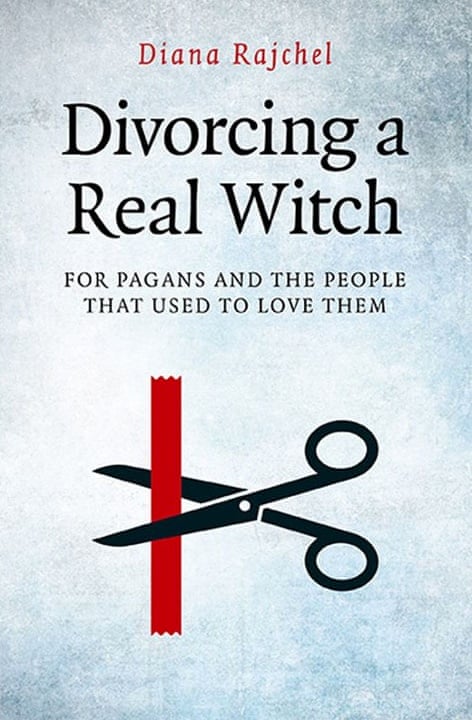
5. Divorcing a Real Witch: For Pagans and the People That Used to Love Them by Diana Rajchel (Moon Books)
Divorcing a Real Witch by Diana Rajchel (£12.99, Moon Books), Oddest book titles
Photo: The Guardian

As the title says, it's for real, a "practical guide for ending Pagan relationships", in the words of The Bookseller. The library doesn't have this, but I have asked if we can purchase a few copies, or at least one for Waiheke, that traditional Wiccan stronghold. Diagram Prize Coordinator Tom Tivnan of The Bookseller commented "Along with its real-life applications for those who have loved and lost in the Wiccan community, Divorcing a Real Witch could also serve as a guidebook for Harry Potter fan-fiction writers who are focusing on the statistically inevitable end of the marriage of Hermione Granger and Ron Weasley".

*Update, 4 March: Auckland Libraries now has this book on order, for Manurewa, Albany, Massey and... Waiheke Libraries! Now that it's on our catalogue, we can read a bio of the author, who definitely possesses some supernatural qualities. "Diana Rajchel is a 3rd degree Wiccan priestess in the Shadowmoon tradition. Her work has appeared in Sage Woman, Circle Network News and Llewellyn annuals since 1909." we are told.


6. The Ugly Wife is Treasured at Home by Melissa Margaret Schneider (Potomac)
photo: The Guardian

Besides its title, another odd thing about this book is that while The Bookseller calls it "An exposé of love and sex under Maoist rule in China", The Guardian decided to describe it as "Love, marriage and life for ordinary citizens during China’s cultural revolution". Or perhaps it is The Guardian which is being revealed as odd. Says Tivnan, "The Ugly Wife is a Treasure at Home is a sentiment which will perhaps resonate with many readers—if they travelled back to the 1950s.”


7. Strangers Have the Best Candy by Margaret Meps Schulte (Choose Art)
Subtitled How talking to strangers leads to a life of crazy adventure and lasting friendship.

Photo: The Guardian
I'm not sure I see the oddness in this one, but I wouldn't be a good judge. Talking to strangers is one of my most -- I'm not going to say 'favourite', perhaps 'inevitable' is the word I'm looking for -- experiences. I will say that the author left something out -- the amazing things you learn. What's candy compared to the tidbits of knowledge you can pick up from strangers? Sometimes more than tidbits, from the philosopher on the bus who told me the story of David on his deathbed instructing Solomon "Do not let his gray head go down to the grave in peace", to the guy who told us about the most beautiful and secret beach in the Peloponnese, to the woman in the supermarket who told me how to make brussel sprouts delicious. Don't ask me to judge the relative importance of these!

But speaking of judging...

"Which of these books is worthy of the accolade for oddest book title of 2014?" asks The Bookseller.

Yes, because the Diagram Prize is decided by public vote. Vote for your favourite now at We Love This Book!

Voting closes at midnight on Friday 20th March, with the winner announced on Friday 27th March.


-- Karen


February 26, 2015

Throwback Thursday (Dies Iovis Reiectata): Latin charm

syndetics-lc"Why read the classics?" asks Italo Calvino in a famous essay published in The New York Review of Books. Then, true to form, instead of answering the question he just posed, the author noted for mixing irony, fable and allegory in works such as Cosmicomics and Invisible Cities, devotes the rest of his allocated space to "suggested definitions" of what makes a classic. Except that in a sort of game of mirrors, when he gets to the end and throws up his hands, we realise that he had been answering the question all along.

Here is how his list starts off:

The classics are the books of which we usually hear people say: “I am rereading…” and never “I am reading….”

Just as you are wondering if this implies you don't make the grade if you don't read your classics multiple times, Calvino deftly unhorses any such presumption. That reiterative prefix, he says, is almost always a small hypocrisy: people are ashamed to admit they've never read the title in question, so pass it off as a rereading.

But actually, he goes on to say, they shouldn't worry, because "read" or "reread" is of little importance with classics. Because,


Every reading of a classic is in fact a rereading.

And similarly, rereadings are like first readings, because, 

Every rereading of a classic is as much a voyage of discovery as the first reading.

I was reminded of these points recently thanks to the wonderful Central City Library basement with its seemingly endless store of old treasures, where I found these:


cover of Winnie Ille Pu
Winnie Ille Pu
Aliciae per speculum transitus

Winnie the Pooh and Through the Looking Glass in Latin!

May I put it out there right away that I have never studied Latin, except for a summer vacation twenty years ago with a book optimistically titled Latin made simple (ha!), and one or two encounters with bilingual editions of Latin poetry. But I have had so much fun leafing through these books. You don't need Latin - you just need to have loved the original. And enjoy words.

From Winnie Ille Pu, the scene where Pooh (sorry, Pu) tries to steal the bees' honey by floating up to their hive attached to a balloon ("folliculo" in Latin!):

'De apibus semper dubitandum est.' says Pu. Always be doubtful of bees.

Famous phrases by great Roman orators and writers are played on wherever possible:

"I don't hold with all this washing", grumbled Eeyore. "This modern Behind-the-ears nonsense."

And what does Ior say? He says "O tempora, o mos ablutionis retroauricularis!" "Oh, this modern custom of washing behind the ears", an adaptation of Cicero's famous exclamation on the shortcomings of his contemporaries, "O tempora, O mores". "Oh what times, oh what customs."

Such gems are pointed out, if you miss them, in notes in the back, which also provide many evocative instances of further information. For instance, we are told that when Pooh asks Christopher Robin if he can see which is the Queen Bee, this has been translated literally as regina apium, but the ancient Romans did not in fact use this expression. For them it was a rex apium, "the sovereign being regarded as a male".

Quite a few works of literature have been translated into Latin, from traditional 19th century classics such as Superbia et Odium (which you can read on line at ephemeris.alcuinus.net) to more modern childhood favourites such as Ursus Nomine Paddington, recently made into a imaginem subitariam.

See if you can guess what these translations correspond to:

Fundus Animalium

Puteus et Pendulum 

Vestes Novae Imperatoris

Tela Charlottae 

Quomodo invidiosulus nomine Grinchus Christi Natalem abrogaverit 

Fabula De Petro Cuniculo  

Insvla Thesavraria

Did you get them all? Congratulatio!


-- Karen

February 24, 2015

Planes, trains and literary loves

syndetics-lcI still laugh about the wintry morning when I headed into the library so distracted by thoughts about trains, or rather, about stories with trains  -- Anna Karenina throwing herself under a train, Coral Musker aboard the Orient Express with the guard calling "Budapest!" as a fellow passenger presses a folded note into her hand -- that I walked right into a big green loden coat. To my delight, the person inside the big coat was Paul Reynolds, the visionary who developed our first website, but also, and in this case more importantly, a keen reader, who in fact had earned his living as a book reviewer when he first arrived from the UK.

Just the person to consult about the question which had me racking my brain: I could think of many books in which trains feature as elements of mystery, excitement, danger -- of romance, in short; but were there not any where airplanes play a similar role? Paul was on to it in a flash. "What about Biggles?", he said.

The story came to mind because I've been reading The Pleasure of Reading, a collection of pieces by noted writers about their literary loves, in which John Carey, Merton Professor of English at Oxford University, also for many years the book reviewer for the Sunday Times, a literature lover who won my heart at an AWRF a few years back, when in a debate inspired by his book What good are the arts? he opined that it's not actually clear that reading books makes anyone a better person, and  more generally for his erudition and wit, has his own Biggles story to tell. Here it is:

Prof. John Carey. Photograph: David Levenson/Getty Images

"Contemporary writing was not represented on the shelves [of the house he grew up in], so for that I had to depend on birthday and Christmas presents, and loans from friends. My favourite modern author was Captain W.E. Johns. I must have read nearly all his Biggles books (though not the cissy Worrals-of-the-WAAF series, of course). The Biggles adventures that most gripped me were the exotic ones. Biggles in the Orient was a marvel of deft plotting about a series of inexplicable crashes among the fighter planes operating against the Japs from a certain Burmese airfield. Inspecting the wreckage of one plane, Biggles finds a scrap of peppermint-scented silver paper. Chewing gum! All at once it dawns on him. Someone must be drugging the pilots' confectionery, so that they pass out when flying over the jungle. Sure enough, back at base, a 'moonfaced' Eurasian mess steward is found injecting the squadron's chewing-gum with a hypodermic. Curtains for Moon-Face.

The scrap of pepperminty paper strikes me, even now, as a brilliant touch -- like the chocolate-paper William Golding's shipwrecked Pincher Martin finds in his pocket, with one agonizingly sweet crumb of chocolate still adhering to it. Perhaps Golding was a Biggles fan, too.

syndetics-lcBiggles in the South Seas enthralled me even more. I forget the plot, but in one episode Biggles's friend Ginger becomes romantically attached to a young female South Sea Islander, and they have an adventure with a giant octopus, involving a lung-searing underwater swim. The girl is clad -- scantily, one gathers -- in something called a pareu. I had no idea what this garment was, but it lingered pleasantly in my mind, eventually getting mixed up with the brief costume worn by Jean Simmons in The Blue Lagoon. Like many teenagers, I felt sure, as puberty approached, that my destiny was to be a poet, and Ginger's girl's pareu figured importantly among my early inspirations, combined with the world-weary tones of T.S. Eliot's J. Alfred Prufrock, whose 'Love Song' completely captivated me after a single reading. I wrote some wistful, elderly recollections of my youth in the South Seas, in free verse, and tapped out my poems one-fingered on my father's huge old Underwood, which lurked under a sort of tarpaulin shroud in the front room. This took a long time, as I had no way of correcting typing errors, and as soon as I made one my authorial pride obliged me to start the whole page again. At last I produced perfect copies, however, and sent them off to The Listener for publication. Why I chose The Listener escapes me, but I realize now that the then literary editor was J.R. Ackerley, later famous for his love affair with his Alsatian bitch Queenie, which he wrote up in My Dog Tulip. However, my tasteful blend of Biggles and T.S. Eliot must have seemed unusual, even to someone of his wide experience.

My poems were some time in coming back, as I had omitted to enclose a stamped, addressed envelope. This was pointed out (in the great Ackerley's hand?) on the rejection slip, which was decorated with the BBC's crest in pastel blue. I was not as pained as I had expected. Being a rejected poet seemed somehow even finer than being published."

syndetics-lcsyndetics-lc


-- Karen

February 19, 2015

Throwback Thursday: An Experiment With Time

Guest post by Tim.

Dreamt Monday 9 Feb: On holiday with family and cats. Staying in beachside house. Sea levels rise overnight due to some kind of lunar/tidal anomaly. Woke to find house surrounded by water. Outside orca frolic and chase stingrays. Seems very menacing to me but children delighted and determined to jump in water to join in fun. I frantically run around stopping one from leaping out window into sea, only for another to escape and find new way to jump into water. Pedro (cat) somehow leaps into water too and also in danger of being eaten by orca. 

File:An Experiment with Time book cover.jpgThe above is part of the raw data I gathered while following the experimental method outlined in the book An Experiment withTime by J. W. Dunne. It was a bestseller at the time of publication (1927) and ran into many editions, but had fallen into obscurity by the time I came across it eighty-something years later in the basement of the Central City Library. In this little book Dunne writes about time and human perception of it, and his theory that we sometimes catch glimpses of the future when we dream. His experiment basically asks the reader to record their dreams every night, and to study them and note any similarities between them and subsequent waking events. 

Dunne was a very practical man apparently -- an aircraft engineer in the very early days of the field -- and goes to great pains to let us know that he is not interested in anything that cannot be explained rationally. "This is not a book about 'occultism', and not a book about what is called 'psycho-analysis'" he writes as soon as we get started. And it is interesting that he chose those two terms, too, because the crux of his argument rests upon the relationship between dreams and precognition. Keep clear, followers of Freud and Madame Blavatsky.

He writes in a friendly, professorial way that makes his theories seem so reasonable. And then he throws in some time-jargon such as: "the serialism of the fields of presentation involves the existence of a serial observer. In this respect every time-travelling field is the field apparent to a similarly travelling and similarly dimensioned observer. Observation by any such observer is observation by all observers pertaining to the dimensionally larger fields." Get it?  Sort of. And then, with diagrams and algebraic terms he outlines some convincing-looking ideas of time and multi-dimensional space and perception, and proves that we can all see the future in our dreams. 

It all seems so convincing that when he describes his own personal experiences with prophetic dreams (like the time he dreamt of being on a volcanic island and being aware that it would erupt and kill 4000 people and the very next day he saw the newspaper headline “Volcano disaster in Martinique 4000 killed”). I'm with him. I mean, everyone has had dreams that seem spookily prescient right? Whether that is precognition or just some quirk of neurology I don't know; but have I always liked the idea that there are things in the natural world that we don’t perceive properly, and that one nice thing about humans is that we really want to come up with ideas to explain them i.e. ghosts, UFOs, precognitive dreams, string theory….

I read An Experiment with Time a while ago but was reminded of it when I saw an article in the Times Literary Supplement (issue dated October 31 2014). In it was published the dream experiment as performed and described by Nabokov in 1964. Like Dunne, Nabokov was a man of scientific interests -- he was a well-respected amateur lepidopterist -- and also a Freud-denier. Nabokov seems genuinely open to the experiment and does seem to find some precognitive scraps amongst his dreams.

Some patches of prose in his dream diary are direct presentiments of his novel  Ada from 1967 (Van Veen, the 'hero' of Ada, writes a treatise on time, 'The Texture of Time', and describes his precognitive dreams as "dim-doom visions: fatidic-sign nightmares, thalamic calamities, menacing riddles.  Not infrequently the menace is well concealed, and the innocent incident will turn out to possess, if jotted down and looked up later, the kind of precognitive flavour that Dunne has explained by the action of "reverse memory").

 An Experiment with Time was popular in its day. I imagine earnest undergraduates in 1927 comparing dream diaries and finding thrilling grains of the future amongst them; or drunken dinner parties becoming suddenly hushed when prophecies are uncannily revealed. Maybe the real reason for its popularity was that Dunne’s experiment gave people permission to talk openly about their dreams (one of the Seven Things You’re Not Supposed To Talk About ).

I wrote about one of my dreams because Dunne made it okay, and because a few days later something happened that seemed somehow familiar even as it happened…

Thursday 12 Feb: Early in morning both rabbits escaped and were running around neighbourhood gardens. Me and S----- running around like slapstick comedians trying to catch them. Pedro was having great time helping round them up. Some correlation? Coincidence? Maybe this relates to dream of 9th ?…Any possible significance in the fact that rabbit escape was morning after I saw meteorite light up night sky, before it crash-landed in the ocean?

-- Tim

February 17, 2015

Remembering Philip Levine

               ...Somewhere
we'll leave the world weighing
no more than when we came

wrote Philip Levine in his poem "A late answer". After I learned that he had died this weekend, I got my book of his poems down from the shelf, and found I had left a marker at that page the last time I was reading in it -- a sheet torn from a local elections booklet, dated October 2013.

I can't place the circumstance, but I can of the other marker in the book, a folded blue post-it. Only my father would have had post-its on hand as he read poetry, and indeed, it was he who had used one to mark another poem, his favourite, the one with which he introduced me to Philip Levine, some twenty years ago now. "Have you read this?" he had said with palpable excitement, handing me the book. It was one of Levine's most famous poems, "They feed they lion".

I remember clearly that moment when I fell under the spell of Philip Levine, of his poem with its rumble of the assembly line, its incisive cadences, its fierce old-testament imagery, all driving it unrelentingly, hypnotically, to its conclusion. "They feed they lion", like James Baldwin's "The fire next time". The fire now. The poem is from the late sixties, the time of "Burn baby burn!", the terrible riots which erupted across America in the wake of Martin Luther King's assassination. The city of Detroit, where Levine had worked on a car factory's assembly line with a man who spoke the words which became the poem's title (noticing that the burlap sacks they had been given to fill with old car parts were stamped "Detroit Municipal Zoo"), was one of the worst hit.

Here's Philip Levine reading it:


...From my five arms and all my hands,
From all my white sins forgiven, they feed,
From my car passing under the stars,
They Lion, from my children inherit,
From the oak turned to a wall, they Lion,
From they sack and they belly opened
And all that was hidden burning on the oil-stained earth
They feed they Lion and he comes.

In the farewells flooding the media, I see Philip Levine being described as the poet who sang of blue-collar America. Having read his description of the effect the Spanish Civil War had on him as a boy in his wonderful memoir The bread of time: toward an autobiography , I can't help but feel that his wrath was aroused by injustice, greed, oppression of the spirit wherever, in whatever form. The workingman's plight was simply his own experience of it.

My own favourite Philip Levine poem differs from "They feed they lion" in being markedly personal, but it is just as intense. Written later in life, it's about his memories of his father -- the relevance of this does not escape me -- and the revelation (Levine's poems always have a revelation, or at least that's how I read them) is the indomitable capacity of the spirit, however world-weary, for renewal. It's called "Starlight", and amazingly enough, I had remembered the poem just this weekend, lying on a picnic table looking up at the night sky, watching for shooting stars. We were on "the Barrier", Great Barrier Island, far from city lights, from any lights, with the stars almost blindingly bright. Shooting stars didn't lack. I like to think that one of them was Philip Levine's spirit, passing over.

Here he is reading "Starlight", from the film "In person: 30 poets", and the text below so you can follow if you like.


Starlight

My father stands in the warm evening
on the porch of my first house.
I am four years old and growing tired.
I see his head among the stars,
the glow of his cigarette, redder
than the summer moon riding
low over the old neighborhood. We
are alone, and he asks me if I am happy.
“Are you happy?” I cannot answer.
I do not really understand the word,
and the voice, my father’s voice, is not
his voice, but somehow thick and choked,
a voice I have not heard before, but
heard often since. He bends and passes
a thumb beneath each of my eyes.
The cigarette is gone, but I can smell
the tiredness that hangs on his breath.
He has found nothing, and he smiles
and holds my head with both his hands.
Then he lifts me to his shoulder,
and now I too am among the stars,
as tall as he. Are you happy? I say.
He nods in answer, Yes! oh yes! oh yes!
And in that new voice he says nothing,
holding my head tight against his head,
his eyes closed up against the starlight,
as though those tiny blinking eyes
of light might find a tall, gaunt child
holding his child against the promises
of autumn, until the boy slept
never to waken in that world again.


Philip Levine, Selected poems

-- Karen

February 11, 2015

Robert Stone 1937-2015

Guest post by Kelly


(photo: New York Times)

There are books you hold gingerly, somehow aware that they exclude a charisma, demanding respect if not immediate understanding. That’s the feeling on first encountering Robert Stone's Dog soldiers, a book that has as much to offer now as when it was first published. 


(New York Times)

Robert Stone died last week. He was seventy-seven and in his time had written eight novels, two short story collections and a memoir. Not a huge count. Contemporaries such as Larry McMurtry, who attended the same university writing programme as Stone, have published well into the double digits. Hard living had something to do with that, but the fact is Stone's books are monoliths. Volumes carved out of hard truths, unflinching in their attempt to appreciate the harsh reality of his time and place. They must have demanded a great deal from him. 


(Buddenbrooks)

You can see some of the character which drove the creation of those books in online interviews. There is one from toward the end of his life. Stone is at a promotion event for his last novel, Death of the black-haired girl. He looks exhausted, flattened by the years and the chronic pulmonary disease from which he eventually died. His thoughts are unfocused and seem to wonder. The book he holds trembles along with his shaking hand. The host mentions Graham Greene and Stone suddenly springs into relief. He’s filled with piss and vinegar, furious scorn;

“I hate Greene. I hate Greene’s soul. I hate his guts. I hate everything he represents. I hate his hatreds. I hate his contempt’s. I hate his falseness. I really have a deep despising of Greene….So my feeling about Greene is really one of considerable despising, as I’m sure his would be about me. I mean Graham Greene was a really good writer, there’s no way around that. I wish I could do something about that….I don’t feel unconnected to Greene but my connection to Greene is really one of hostility and rejection, because I think he made claims to knowledge and to insight that he was not properly entitled to…”
The rant is not without humour, Stone has a twinkle in his eye as he delivers it, but at the core is contempt for lack of truth. It’s pure and it’s the opinion of a man that does not write ‘entertainments’. 


(Salem Press Inc)

The knowledge at the centre of Stone's rancour is probably esoteric as much as political. Greene's problematic Catholicism does not match up with Stone's search for a truth, (or, probably, with Ston'es early life experience in a Catholic orphanage after his mother was hospitalised with schizophrenia.) His novels are full with questers, mystics but theirs is not a guilt ridden struggle with conscience, or a way of getting your leg over, but rather a search for transcendental reality. It’s a quality which became more developed as Stone's career progresses and is most apparent in novels such as Outbridge reach, Damascus gate and Bay of souls. In his Paris Review interview Stone described himself as a theologian but it would probably be closer to the mark to say his inclinations were gnostic, not interested in theory but, rather, direct spiritual experience.

In a memoir on The Jewish Daily Forward website Abe Mezrich talks of Stone's fascination with the Kabballah. Mezrich attributes Stone's attraction to the teaching that God is a force withdrawn from the universe, likening it to Stone's own experience of being abandoned by his father soon after birth. The rooting of the numinous in concrete, painful experience is one which Stone returns to again and again in his writing. The process is perilous, dangerous and quixotic, the cost is huge, but for Stone this is where the spark is found. 


(The Morning News)

Stone was also concerned with place. His novels are set in Central America, Mexico, Jerusalem, Haiti, Vietnam and the open Atlantic Ocean. Even in the American novels settings are marked, New Orleans and California in the late 60s. Places with character. Places with their own mythologies. There is a romance in their portrayal, appreciation of strange dangers and exotic attractions, of the tiny details and customs that make up their charisma. Stone himself admitted that his luck of productivity could be at least partly attributed to his wanderlust, something that it is hard to begrudge given the tantalising lucidity in which he presents these locales.  


(Interview Magazine)

Though there was pleasure to be had in his sense of place, that satisfaction was always eclipsed by serious purpose. Stone was concerned with those areas for their political significance, for the ready example they offered of 20th century American adventurism and its consequences. It seems a pity that we are to be robbed of his vision just as his novels reached the cusp of our modern world. The Death of the black-haired girl portrays the post 9/11 world but does not touch on the many wars in the Middle-East or the moral fallout of these conflicts on the world and American society. It seems that had he lived and produced one more novel Stone might have shown that we have not learned much over the course of his lifetime. That we have come full circle and back to the Dog soliders years.

-Kelly

Links

The TotalAntitotalist Robert Stone -  InterviewMagazine interview


Available form Auckland Libraries


Powered by Blogger.