Showing posts with label Diagram Prize. Show all posts

March 03, 2015

The Diagram Prize for the Oddest Book Title. It's back!

                                            
And not just back for another year, but back in form. If you've been visiting Books in the City over the years, you may recall -- and perhaps you even shared -- my recurring disappointment during the last few editions of the prize with how the surest road to the shortlist seemed to have become the gleeful, not to say calculated, brandishing of the scatological, which I ranted on about in Winning with Poo: thoughts on the Diagram Oddest Title Prize 2014, and Hunting the oddest book title the year before.

But today, Diagram Prize, may I offer my compliments on your having dusted off your founding principles of discovering the unabashed, unlaboured odd title, and taking it out for a night on the town -- not a Diner de Cons (Dinner of fools) either, more of a Roman Holiday, you know, the girl who had never been on a Vespa, never eaten ice-cream on the street, who gets her day in the sun before returning to her daily grind, well, so to speak, she is a princess.

Even the title of the article with which The Bookseller, the organisers of the prize, announced the shortlist shows more finesse than in many a year. "Nether regions and pavements hot on Diagram Prize shortlist", it read.

The Diagram Prize shortlist


syndetics-lc1. Nature's nether regions: what the sex lives of bugs, birds, and beasts tell us about evolution, biodiversity, and ourselves by Menno Schilthuizen (Viking)

"Researching private parts was long considered taboo," says the publisher's description, "but scientists are now beginning to understand that the wild diversity of sex organs across species can tell us a lot about evolution". You have to love that 'wild'.


2. Advanced Pavement Research edited by Bo Tian (Trans Tech)

Subtitled Selected, Peer Reviewed Papers from the 3rd International Conference on Concrete Pavements Design, Construction, and Rehabilitation, December 2-3, 2013, Shanghai, China, this volume of papers from a pavement symposium is not available at the library. But you are welcome to put in a suggestion for purchase.


syndetics-lc3. The madwoman in the Volvo : my year of raging hormones by Sandra Tsing Loh (Norton)

"A memoir of the menopause". Readers in the Central City, Grey Lynn, St Heliers and Devonport (two in Devonport!) are currently enjoying this book by an American comedian who is here to tell us (the catalogue summary says) that "it does get better". Yes, after you have to write off the Volvo, they give you a room in the attic. 


4. Where do camels belong? The story and science of invasive species by Ken Thompson (Profile Books)

syndetics-lcDr. Thompson, a lecturer in the Department of Animal and Plant Sciences at the University of Sheffield who also writes regularly on gardening for the Daily Telegraph, and not one to clamour for attention, uses chapter headings such as "Two rather unsuccessful theories", followed by "A slightly better theory", before working up to "The strange tale of the harlequin ladybird" and "Japanese knotweed: lice to the rescue", followed by a plunge into the downright controversial (and, let's just say it, seriously interesting) "Five myths about invasions (#1 Alien invasions reduce biodiversity and ecosystem function; #2 Alien species cost us a fortune; #3 Aliens are always to blame; #4 Aliens are out to get us; #5 Aliens are bad, natives good).


5. Divorcing a Real Witch: For Pagans and the People That Used to Love Them by Diana Rajchel (Moon Books)
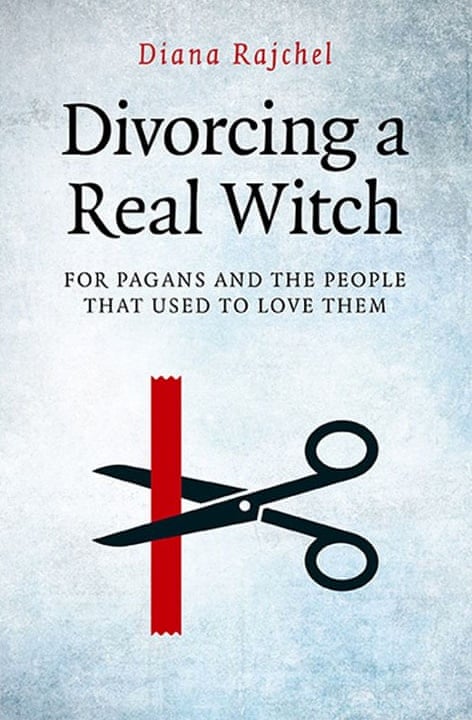
Divorcing a Real Witch by Diana Rajchel (£12.99, Moon Books), Oddest book titles
Photo: The Guardian

As the title says, it's for real, a "practical guide for ending Pagan relationships", in the words of The Bookseller. The library doesn't have this, but I have asked if we can purchase a few copies, or at least one for Waiheke, that traditional Wiccan stronghold. Diagram Prize Coordinator Tom Tivnan of The Bookseller commented "Along with its real-life applications for those who have loved and lost in the Wiccan community, Divorcing a Real Witch could also serve as a guidebook for Harry Potter fan-fiction writers who are focusing on the statistically inevitable end of the marriage of Hermione Granger and Ron Weasley".

*Update, 4 March: Auckland Libraries now has this book on order, for Manurewa, Albany, Massey and... Waiheke Libraries! Now that it's on our catalogue, we can read a bio of the author, who definitely possesses some supernatural qualities. "Diana Rajchel is a 3rd degree Wiccan priestess in the Shadowmoon tradition. Her work has appeared in Sage Woman, Circle Network News and Llewellyn annuals since 1909." we are told.


6. The Ugly Wife is Treasured at Home by Melissa Margaret Schneider (Potomac)

photo: The Guardian

Besides its title, another odd thing about this book is that while The Bookseller calls it "An exposé of love and sex under Maoist rule in China", The Guardian decided to describe it as "Love, marriage and life for ordinary citizens during China’s cultural revolution". Or perhaps it is The Guardian which is being revealed as odd. Says Tivnan, "The Ugly Wife is a Treasure at Home is a sentiment which will perhaps resonate with many readers—if they travelled back to the 1950s.”


7. Strangers Have the Best Candy by Margaret Meps Schulte (Choose Art)
Subtitled How talking to strangers leads to a life of crazy adventure and lasting friendship.

Photo: The Guardian
I'm not sure I see the oddness in this one, but I wouldn't be a good judge. Talking to strangers is one of my most -- I'm not going to say 'favourite', perhaps 'inevitable' is the word I'm looking for -- experiences. I will say that the author left something out -- the amazing things you learn. What's candy compared to the tidbits of knowledge you can pick up from strangers? Sometimes more than tidbits, from the philosopher on the bus who told me the story of David on his deathbed instructing Solomon "Do not let his gray head go down to the grave in peace", to the guy who told us about the most beautiful and secret beach in the Peloponnese, to the woman in the supermarket who told me how to make brussel sprouts delicious. Don't ask me to judge the relative importance of these!

But speaking of judging...

"Which of these books is worthy of the accolade for oddest book title of 2014?" asks The Bookseller.

Yes, because the Diagram Prize is decided by public vote. Vote for your favourite now at We Love This Book!

Voting closes at midnight on Friday 20th March, with the winner announced on Friday 27th March.


-- Karen


April 04, 2014

Winning with Poo: thoughts on the Diagram Oddest Title Prize 2014

"A little madness in the Spring
Is wholesome even for the King"

(Emily Dickinson #1333)

At 36, the Diagram Prize for the Oddest Book Title of the Year may be the youngest among the many eccentric traditions of the British springtime, centuries behind cheese-rolling, the Nutters Dance, and the Hare Pie Scramble, but it need harbour no inferiority complex. The prize, which is awarded annually by the book industry trade magazine The Bookseller, lacks neither for prestige -- in fact its custodian, The Bookseller's "legendary" diarist Horace Bent refers to it as "my prestigious prize" - nor for popularity. More people voted for the Diagram of Diagrams, won by Greek Rural Postmen and Their Cancellation Numbers, than voted for the Booker of Bookers, won by Salman Rushdie.


Greek Rural Postmen and Their  Cancellation Numbers obviously merits its star status, but the Diagram Prize has called our attention to many sleeper glories over the years, including these, a few of my personal favourites:

How to Avoid Huge Ships
Designing High Performance Stiffened Structures
People Who Don't Know They're Dead: How They Attach Themselves to Unsuspecting Bystanders and What to Do About It
Highlights in the History of Concrete


which are now joined by the 2014 winner

      How to Poo on a Date

Subtitled The Lovers' Guide to Toilet Etiquette, this book answers "one of the most important questions that has played [sic] on the mind of mankind for centuries", according to its publishers.

The runners-up are:

Pie-ography
Subtitles are de rigueur with odd titles and are usually prosaic, as in the case above. But Pie-ography's subtitle, When Pie Meets Biography, is perhaps even more satisfyingly odd than the title.

"Anger" van Damme
How to Pray When You're Pissed at God
Here it was the publisher's blurb which was odder than the title. "Have you ever gotten pissed off at God? Moses did. So did Jesus and Anger van rear," I read.

Anger van Rear? Who's that? Some Jean-Claude van Damme rip off?

Reading on, all was revealed. That "van" was just a typo: "Anger van rear its ugly head" the line went on to say. Indeed it van. And proofreaders bow theirs.

The Origin of Feces
 Subtitle: What excrement tells us about evolution, ecology, and a sustainable society

Are Trout South African?
Subtitle: Stories of Fish, Places and People. 

and the one I voted for:

Working Class Cats
subtitle: The Bodega Cats of New York City

Tom Tivman, Features Editor at The Bookseller, was plumping for Working Class Cats to win as well, describing it as "a blend of feline heroism, Brooklyn hipster chic and Soviet realism".

You can get an idea of what's in the book by visiting the facebook page of this laudable awareness-raising initiative supporting "NYC cats who don't get paid for their labour", which contains gems such as:


"ScuzzBucket from Bleeker Street Records wins the fatty award, hands down."

So there you have it, a shortlist which Tivnan announced as one which "taps into the zeitgeist", with something for everyone, from internet cat-watchers to fans of foodie shows, and, "And we have two books about poo".

And this is where I come to the question "playing" on my mind, I might even say "preying" on my mind (but not "praying", pissed off or not):

Is Poo odd?

Although last year's Goblinproofing One's Chicken Coop-led shortlist did feature a number of titles on topics of perennial interest and oddity such as penises, knitting and Nazism, and none at all on human waste, the previous year it was again poo, in the guise of Cooking with Poo, which took the prize. Horace Bent recalled "a long tradition" when he announced this year's winner on Twitter, adding in How to Shit in the Woods ('89 winner) and American Bottom Archaeology ('93).

This pairing exactly illustrates my point. Is that first title really odd, or just a title containing a word which clamours for attention? My hunch is that as with people, the truly odd are always the ones who are not aware of being odd:  the aristocrat who goes around in glasses held together with tape, the grown man in front of you in the line for ice-cream, asking a lot of questions about the chocolate dip as the movie is about to start. In fact, the second of those titles, American Bottom Archaeology is wonderful to us in the same proportion as it was ordinary for its authors. American Bottom Archaeology is, they go on to tell us in their subtitle, simply A Summary of the FAI-270 Project Contribution to the Culture History of the Mississippi River Valley.

That's how I see it anyway. I am clearly a minority, given that the Diagram Prize is selected by public vote. In the old days, in the nude mice days and the lengthwise rolling days, Horace Bent decided the prize. He seems as chipper as ever when announcing the outcomes, but he has over the years let slip a comment or two about his dislike for the "intentionally rude".

A pity I didn't come across this 2013 title in time or I could have nominated it:  How To Seduce Women With Good Spelling, subtitled The Three Words You Can Learn To Spell Right Now In Order To Become A More Successful Lover, available on Amazon for kindle (never more apt), author a certain "Emma R".

Emma R? Emma R? Why does this sound familiar?

 Why of course!

Emma Rouault was the name of that irrepressible reader of romantic novels who made the big mistake of marrying the dull, definitely not odd, Charles Bovary.

March 01, 2013

The Diagram Prize: hunting the oddest book title


Every year at this time, in a little island kingdom far to the North, as the crocuses start poking through the snow, Horace Bent of The Bookseller announces his shortlist for the Diagram Prize for Oddest Book Title and opens the voting, regaling the literary scene with a bright and eagerly anticipated annual recurrence of its own.

And yet, and yet.

For many years, Mr. Bent could do no wrong in my eyes. How could he, the man who brought to our attention Proceedings of the Second International Workshop on Nude Mice, the first-ever Diagram Prize winner (35 years ago, when the prize originated as a way of staving off boredom at the Frankfurt Book Fair), and went on to select such gems as Highlights in the History of Concrete, How to Avoid Huge Ships, Reusing Old Graves, Bondage for Beginners and my favourite, Greek Postmen and their cancellation numbers.

I loved the way Mr Bent disdained the odd title for odd title's sake, or as he saw it, just for the sake of winning his "prestigious award", or even, perhaps, although this doesn't seem to be part of Mr. Bent's mindset (curious perhaps for one employed by the UK's definitive book industry publication), or maybe he's too polite to mention it, to sell more books. And then last year, an about-face as Cooking with Poo took the prize. So attention-grabbing, so obvious, compared to the multinuanced, admirably earnest Designing High Performance Stiffened Structures from the Institute of Mechanical Engineers.

Over the last few years I've watched the deliberately odd title proliferate ever more among each succeeding year's offerings, to the point that this year they make up 2/3 of the offering. And let's face it, even the earnestly odd titles, all two of them, are not show-stoppers.

Here is the shortlist:

Was Hitler Ill? by Henrik Eberle and Hans-Joachim Neumann (Polity)

Lofts of North America: Pigeon Lofts by Jerry Gagne (Foy’s Pet Supplies)  

How to Sharpen Pencils by David Rees (Melville House)

God’s Doodle: The Life and Times of the Penis by Tom Hickman (Square Peg)

Goblinproofing One’s Chicken Coop by Reginald Bakeley (Conari)

How Tea Cosies Changed the World by Loani Prior (Murdoch).


Was Hitler Ill? I'm not sure I'd call this title odd at all, except for how, depending on your font of choice, it can look as if it's about Hitler's grandson, Hitler III. I know about this because it used to always happen to me with North Korean dictators, eg Kim Jong Ill. Oops, Il.

Actually, with many dictators, although not with Hitler, there comes a moment when people start asking not if they are ill, but if they are actually dead, and just stuffed and propped up in the reviewing box for picture-taking on important occasions.

The library catalogue gives the original German title, which is a fascinating case of a phrase almost making sense in two different languages:

War Hitler Crank?

I think we can answer a resounding yes to that.

Lofts of North America: Pigeon lofts. There is a Yiddish expression for what I want to say here, but I don't know how to write it. There's also an Italian hand gesture, the one where you put out your hand palm down and wiggle it as if you were playing the piano. But I actually voted for this one, just to remind Mr Bent that there are some purists still around. (I note that the North American pigeons have not arrived in the Southern hemisphere yet so no book about their lofts at Auckland Libraries. When I see a flock of pigeons in spanking new trainers, ankle socks, and tucked-in t-shirts I'll yell out.)


How to Sharpen Pencils.  Similar to the above. The author is an ex-political cartoonist who had himself photographed in a white shirt a la Anthony Bourdain, but lacking his Hell's Kitchen carnality. On the other hand, let's not forget we're talking comics here.

God’s Doodle: The Life and Times of the Penis. Maybe we could make one good title out of two: Was Hitler's penis ill?

Goblinproofing One’s Chicken Coop. Mr Bent, leave chickens alone. You will never surpass The joy of chickens which you gave us a few years back.  

How Tea Cosies Changed the World. My case rests. Blatantly cashing in on the current trendiness of tea cosies.

Obviously I need to find out how to nominate titles. I think this one is a good candidate, for example:

Canine Body Language: A Photographic Guide: Interpreting the Native Language of the Domestic Dog by Brenda Aloff

I don't say dogs don't have a language - of a type - but don't you have to speak to have a Native Language? Plus, you've got to love the way the colons turn the title into a series of yips. Yip yip yip: yip yip yip: yip yip yip yip yip.

And how about The Little Book of Slugs, ed. by Allan Shepherd and Suzanne Gallant?

The description of this book contains further gems, such as that you'll find details of "slug lifestyles". I'm guessing the couch potato slug, the gym bunny slug...

Mathematics forums, conferences, catalogues etc. offer a fertile hunting ground as well. Right off my first click I found an excellent Degenerate Diffusions, which included a discussion of the controlled martingale problem, and of which I can't remember the author's name, unlike the next one I came across, a case of a normal title (Mathematics for the millions) boasting an excellent odd author name, Lancelot Hogben.

And then, lo, my best find yet! Title and author both odd:

Mathematical Cranks
by Underwood Dudley

I see myself meeting this author one day on some North American --not loft, let's say a university campus, in a faculty lounge smelling of percolated coffee. I spy him dabbing at his nose with a crumpled tissue and I call out "War crank, Dudley?"

Read more about the Diagram Prize at The Bookseller.

And do this: vote for your favourite title at We Love This Book. Winner announced 22 March.

May 01, 2012

Disappointed by the Diagram Prize for Odd Titles

From The bookseller 

"Cooking with Poo, a Thai cookbook penned by Bangkok resident Saiyuud Diwong and published in Australia, has trumped its rivals to scoop The Bookseller's coveted Diagram Prize for Oddest Book Title of the Year award.

"The 114-page cookbook was crowned the winner having received the majority share of the public vote at thebookseller.com and its sister consumer website welovethisbook.com. In total, 1,363 votes were cast, with the breakdown as follows:

1) Cooking with Poo by Saiyuud Diwong (Urban Neighbours of Hope) 38% 2) Mr Andoh’s Pennine Diary: Memoirs of a Japanese Chicken Sexer in 1935 Hebden Bridge by Stephen Curry and Takayoshi Andoh (Royd Press) 22% 3) The Great Singapore Penis Panic and the Future of American Mass Hysteria by Scott D Mendelson (Createspace) 13% 4) Estonian Sock Patterns All Around the World by Aino Praakli (Elmatar) 12% 5) The Mushroom in Christian Art by John A Rush (North Atlantic Books) 8%  6) A Taxonomy of Office Chairs by Jonathan Olivares (Phaidon) 4%  7) A Century of Sand Dredging in the Bristol Channel: Volume Two by Peter Gosson (Amberley) 3% "
     
  Well. I for one am disappointed. I have always looked forward to finding out every year what quirky title had been added to the list of winners of the Diagram Prize, from Greek postmen and their cancellation numbers (I have a feeling a readers' poll once chose this one as the best of the best) to How to avoid large ships. I think this tendency to nominate titles which have clearly been picked by the publishers as ones which would play to the peanut gallery is betraying the distinguished origin of the prize, which was finding a way to stave off boredom at the Frankfurt Book Fair.

In case you are saying, well, have you got something better, I do have a candidate. It's a Canadian bestseller called Slow Death by Rubber Duck, described on its website like this: "Provocative and groundbreaking, Slow Death by Rubber Duck reveals how the living of daily life creates a toxic soup inside each of us".

If I am going to be a purist, though, I should probably admit that this title could also be put in the intentionally-clever-rather-than-unintentionally-odd basket. Luckily, I have a back-up title, spotted on the library's bestseller shelves last year. Here it is:

The bonus years diet : 7 miracle foods including chocolate, red wine, and nuts that can add 6.4 years on average to your life by Ralph Felder and Carol Colman.

I love this! What kind of person writes a title like that? "6.4 years on average?" On average? Wouldn't on average be "more than six" or "six or seven", or maybe, "a handful" (five fingers on a hand!), or even "quite a few"?

I'm putting forward Steve Carell as the right person to play Ralph Felder if they ever decide to make a movie about the "dramatic studies" (I quote from the book summary) which led to the writing of this book.

In case you wanted to know, Poo means "crab" in Thai, and is the author's nickname. The library doesn't have a copy but when I searched the catalogue for it, I was offered The ladies' loos: from plumbing to plucking, a practical guide for girls as an alternative.

March 29, 2010

Diagram Prize announces year's oddest title!

Crocheting Adventures with Hyperbolic Planes is the winner of the Diagram Prize for the year’s oddest title, followed by What Kind of Bean is this Chihuahua? and Collectible Spoons of the Third Reich.

My vote had gone to Collectible spoons of the Third Reich. I was disappointed to see it come in behind a kids book (shouldn’t kids books be handicapped, like overly endowed racehorses, in a contest for odd titles?) but Horace Bent, custodian of the prize, more than made it up to me with these comments quoted in the The Bookseller's official announcement on March 26th:

"Crocheting Adventures with Hyperbolic Planes proved to be the initial front runner. It defended its poll-topping position despite strong support for the spoon-carrying Third Reich, once again attempting to muscle in on someone else’s territory.

"But the public proclivity towards non-Euclidian needlework proved too great for the Third Reich to overcome. If only someone had let the Poles know in ’39.”

Titles have been on my mind recently. I finally got around to reading Nicholas Shakespeare’s biography of Bruce Chatwin, one of my favourite literary personalities since the times of In Patagonia, considered one of the great travel books, which it is, but not only. In Patagonia is the reason why, when we had to clear out my childhood home after my parents died, I put at the top of the list of the things I wanted the fragment of dinosaur egg which a student of my father’s had sent him from some dig somewhere in France, and which resided ever after on the dining room bookshelves amid H Rider Haggard books, family snapshots and rock samples. Those of you who have read In Patagonia will get it: it's my brontosaurus skin. If you haven't read it, do.

When I saw how thick Nicholas Shakespeare's book was, I was afraid that it might be one of those biographies like Norman Sherry’s magnum opus on Graham Greene, in which for every day of Mr. Greene’s life we are given such details as where he had tea and what kinds of cakes he had, or the postcard he sent to his colleague at The Times, and what room that colleague's office was in. But it wasn’t. In fact, 600 pages seemed the only length one could possibly use to close in – a bit – on someone as complicated, contradictory, elusive and talented as Bruce Chatwin.

I kept it on my bedside table and every night for about a month I’d pick it up and read ten or twenty pages wherever the book opened to, and every time there’d be a different -- how does Yeats put it, "the careless planets in their courses”. Loulou de la Falaise, Werner Herzog, Robert Mapplethorpe, Gregor von Rezzori, and so on and so on, and… a British film maker named Peter Adam, who wrote an autobiography with the fantastic title Not drowning but waving. Maybe it’s because I’m not English (I was told, as I went around the library enthusing, that it’s a common phrase in Britain) but for me this went right up on there on the best-ever autobiography titles list.

Who out there has played the game of  'What would be the title of your autobiography'?  Back in my twenties I found this jewel in an old phrasebook for travellers and thought it could be mine: The lady wants hers with cream.

And now I’ve found a new one, for my prime. Danger vehicle exit lane. Driving into the Civic Car Park the other day I caught sight of this trenchant, punctuation free warning on a sign posted alongside the carriageway opposite mine.  My first thought  - I swear this is true - was that it was indicating an exit lane reserved for “danger vehicles” eg giant diggers and such. And it flashed through my mind that if they only knew, they’d be making me use that lane. This was a few days after I’d knocked off a hubcap on the approach to the Hopetown bridge. I had an image of my little white Vitz with its missing hubcap, like a tomcat with a torn ear, bursting out of the Danger vehicle exit lane into the night.

Which is my favourite autobiography title? Probably this one from the great adventurer Beryl Markham, the first person to fly solo over the Atlantic from east to west:

West with the night

At the library:

Bruce Chatwin by Nicholas Shakespeare

In Patagonia by Bruce Chatwin

West with the night by Beryl Markham

March 01, 2010

Diagram Prize: Cast your vote!

Afterthoughts of a Worm Hunter by David Crompton

Collectible Spoons of the Third Reich by James A Yannes

Crocheting Adventures with Hyperbolic Planes by Daina Taimina

Governing Lethal Behavior in Autonomous Robots by Ronald C Arkin

The Changing World of Inflammatory Bowel Disease by Ellen Scherl and Maria Dubinsky

What Kind of Bean is This Chihuahua? By Tara Jansen-Meyer

Not the reading list for a very serious Book Club, but the short list for the 2009 edition of everyone's favourite quirky literary award, the Diagram Prize for the year's oddest book title. The Diagram Prize is run by the British trade magazine The Bookseller, in the sense that they organize the voting, but it is the magazine’s diarist Horace Bent who is its guiding spirit and custodian.

Mr. Bent used to select the winner, but since about 2000 (the Diagram Prize, which began as a way of beating boredom at the Frankfurt Book Fair, is over 30 years old) he only creates the short list from titles submitted by the public, who then get to vote their favourites. I haven’t seen it stated but I don’t think the change was his idea. He has been known to grumble over some of the public’s choices, mostly the “rude” titles they have a tendency to pick, such as If you want closure in your relationship, start with your legs which went on to win a few years ago.

He also scoffs at the intentionally odd. "The adage that everyone has a book in them may well be true," he is quoted as saying, "but that doesn't mean every Tom, Dick and Harry out there can bash a few words out on a keyboard and then upload it to Scribd with a humorous title like: The Historic Adventures of the Purple Waffle Iron on His Horse Made of Asparagus, and then think they have a chance at winning my prestigious award. I refuse to acknowledge such submissions."

You can see on The Bookseller website Bent's long list of the titles he felt passed muster. I was curious to see if I had read any of them. I hadn’t, but I feel I did come within a couple of degrees. Just a few weeks ago my eye was caught by a book on a shelving trolley with the odd title Tuna: a love story, and I now see its close relative Bacon: a love story on the longlist.

Okay, I didn't read it all, but I did read the start and other good bits here and there. I was expecting a jokey, David Sedaris-type book about growing up with a Tuna casserole-making Mom. Actually, although it began very funnily (perhaps, in a sort of Diagram moment, without the author even realizing it) by mentioning that the fifteenth century British printer who produced the first treatise about fishing was named Wynkyn de Worde, the book really was a love story to the fish alive and free in the ocean -- when it manages to be, which is scarily always less often, because of the enormous amounts of raw tuna being consumed, in Asia but now also in the western world, where sesame-encrusted slivers now gaze down from the Mt. Olympus of taste on those sad, unlucky melts and casseroles.

Visit the website http://www.thebookseller.com/ to vote for your favourite shortlisted title.  The voting closes March 21 and the winner will be announced on March 26.

*****************
Tuna: a love story by Richard Ellis, if you're interested in knowing more about this magnificent animal, one of the most highly evolved of the fishes - maybe the most highly evolved, I can't remember now. But I do remember that it makes the longest journey of them all: across the Pacific from California to Japan, where it turns right around and heads back, all of this at 55 mph.

and a book which is not an odd title but a fascinating story, at once nostalgic and unconventional, that I'd like to recommend: Mattanza: love and death in the Sea of Sicily, Theresa Maggio's eye-witness description of the 4000 year old ritual of the Sicilian tuna slaughter (what "mattanza" means). Once a year, in Spring, when the tuna arrive in the Mediterranean to spawn, for one hour the sea turns red. There's a bit of a love story with a fisherman, but the people I've given the book to read ignore that part, just as I did. The sea is the real romance here.

July 01, 2009

Spunge or sieve? Types of readers

"I like the idea of the Diagram Prize" began the comment from Moocho, who read up on it after my Kafka post in which I made a quip about this award for Oddest Title of the Year. He went on, "My favourite was How to avoid huge ships, something that keeps me up at night." At first glance, the lack of formatting made it seem as though the entire sentence was the title, a very good one at that. Or maybe "How to avoid huge ships, something that keeps me up at night" is really better for a song title, along the lines of "I've got the you don't know the half of it, dearie blues" (the great Gershwin).

"Greek Rural Postmen and Their Cancellation Numbers" is the metaphysical-sounding winner of last year's The Diagram of Diagrams, celebrating the 30th anniversary of the prize and inspired by the Booker of Bookers. Or was that the Best of Booker? Anyway, more people voted for the Diagram of Diagrams than the Booker maxima, as it turns out, 8000 something to 7000 something.

I also liked last year's shortlisted "The large sieve and its applications", described as a 350 pg book with many tables and exercises. It's already a Google book (they work fast!) so you can further enjoy such gems among its chapters as "Explicit bounds" and "Random Walks in Discrete Groups".

Among applications for the sieve, we might remember Samuel Taylor Coleridge, who was not only the great romantic poet of the dreamy, druggy "Kubla Khan" and the demented and terrifying "The Rhyme of the Ancient Mariner" but an astute social and political commentator as well, who applied it to reading, or rather, to a type of reader. In all he identified four kinds of readers, beginning with the spunge, which I'm pretty sure would be me:

"1. Spunges that suck up every thing and, when pressed give it out in the same state, only perhaps somewhat dirtier.
2. Sand Glasses -- or rather the upper Half of the Sand Glass which in a brief hour assurdely lets out what it has received -- & whose reading is only a profitless measurement and dozeing away of Time.
3. Straining Bags, who get rid of whatever is good & pure, and retain the Dregs
4. and lastly, the Great-Moguls Diamond Sieve -- which is perhaps going farther for a Simile than its superior Dignity can repay, inasmuch as a common Cullender whould have ben equally symbolic. But Imperial or culinary, these are the only good, & I fear the least numerous, who assuredly retain the good while the superfluous or impure passes away and leaves no trace." 
(From his 1808 lecture series on Poetry and the principles of taste)

Try Coleridge's Biographia Literaria or Biographical sketches of my literary life and opinions in two volumes from the Central City Library basement stacks.


Powered by Blogger.