Showing posts with label Oddest Title. Show all posts

March 03, 2015

The Diagram Prize for the Oddest Book Title. It's back!

                                            
And not just back for another year, but back in form. If you've been visiting Books in the City over the years, you may recall -- and perhaps you even shared -- my recurring disappointment during the last few editions of the prize with how the surest road to the shortlist seemed to have become the gleeful, not to say calculated, brandishing of the scatological, which I ranted on about in Winning with Poo: thoughts on the Diagram Oddest Title Prize 2014, and Hunting the oddest book title the year before.

But today, Diagram Prize, may I offer my compliments on your having dusted off your founding principles of discovering the unabashed, unlaboured odd title, and taking it out for a night on the town -- not a Diner de Cons (Dinner of fools) either, more of a Roman Holiday, you know, the girl who had never been on a Vespa, never eaten ice-cream on the street, who gets her day in the sun before returning to her daily grind, well, so to speak, she is a princess.

Even the title of the article with which The Bookseller, the organisers of the prize, announced the shortlist shows more finesse than in many a year. "Nether regions and pavements hot on Diagram Prize shortlist", it read.

The Diagram Prize shortlist


syndetics-lc1. Nature's nether regions: what the sex lives of bugs, birds, and beasts tell us about evolution, biodiversity, and ourselves by Menno Schilthuizen (Viking)

"Researching private parts was long considered taboo," says the publisher's description, "but scientists are now beginning to understand that the wild diversity of sex organs across species can tell us a lot about evolution". You have to love that 'wild'.


2. Advanced Pavement Research edited by Bo Tian (Trans Tech)

Subtitled Selected, Peer Reviewed Papers from the 3rd International Conference on Concrete Pavements Design, Construction, and Rehabilitation, December 2-3, 2013, Shanghai, China, this volume of papers from a pavement symposium is not available at the library. But you are welcome to put in a suggestion for purchase.


syndetics-lc3. The madwoman in the Volvo : my year of raging hormones by Sandra Tsing Loh (Norton)

"A memoir of the menopause". Readers in the Central City, Grey Lynn, St Heliers and Devonport (two in Devonport!) are currently enjoying this book by an American comedian who is here to tell us (the catalogue summary says) that "it does get better". Yes, after you have to write off the Volvo, they give you a room in the attic. 


4. Where do camels belong? The story and science of invasive species by Ken Thompson (Profile Books)

syndetics-lcDr. Thompson, a lecturer in the Department of Animal and Plant Sciences at the University of Sheffield who also writes regularly on gardening for the Daily Telegraph, and not one to clamour for attention, uses chapter headings such as "Two rather unsuccessful theories", followed by "A slightly better theory", before working up to "The strange tale of the harlequin ladybird" and "Japanese knotweed: lice to the rescue", followed by a plunge into the downright controversial (and, let's just say it, seriously interesting) "Five myths about invasions (#1 Alien invasions reduce biodiversity and ecosystem function; #2 Alien species cost us a fortune; #3 Aliens are always to blame; #4 Aliens are out to get us; #5 Aliens are bad, natives good).


5. Divorcing a Real Witch: For Pagans and the People That Used to Love Them by Diana Rajchel (Moon Books)
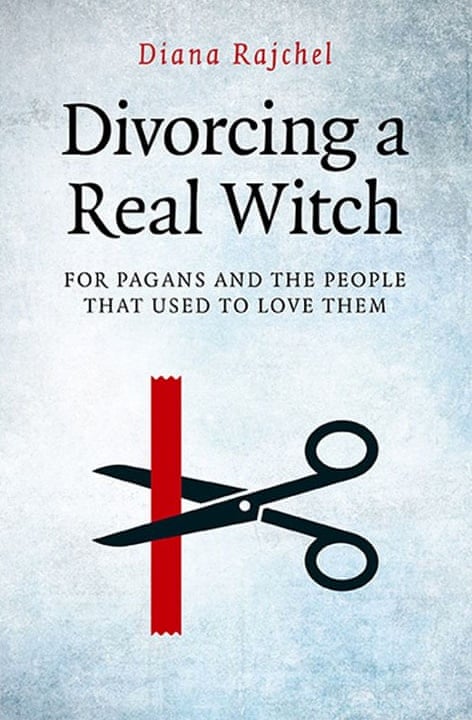
Divorcing a Real Witch by Diana Rajchel (£12.99, Moon Books), Oddest book titles
Photo: The Guardian

As the title says, it's for real, a "practical guide for ending Pagan relationships", in the words of The Bookseller. The library doesn't have this, but I have asked if we can purchase a few copies, or at least one for Waiheke, that traditional Wiccan stronghold. Diagram Prize Coordinator Tom Tivnan of The Bookseller commented "Along with its real-life applications for those who have loved and lost in the Wiccan community, Divorcing a Real Witch could also serve as a guidebook for Harry Potter fan-fiction writers who are focusing on the statistically inevitable end of the marriage of Hermione Granger and Ron Weasley".

*Update, 4 March: Auckland Libraries now has this book on order, for Manurewa, Albany, Massey and... Waiheke Libraries! Now that it's on our catalogue, we can read a bio of the author, who definitely possesses some supernatural qualities. "Diana Rajchel is a 3rd degree Wiccan priestess in the Shadowmoon tradition. Her work has appeared in Sage Woman, Circle Network News and Llewellyn annuals since 1909." we are told.


6. The Ugly Wife is Treasured at Home by Melissa Margaret Schneider (Potomac)

photo: The Guardian

Besides its title, another odd thing about this book is that while The Bookseller calls it "An exposé of love and sex under Maoist rule in China", The Guardian decided to describe it as "Love, marriage and life for ordinary citizens during China’s cultural revolution". Or perhaps it is The Guardian which is being revealed as odd. Says Tivnan, "The Ugly Wife is a Treasure at Home is a sentiment which will perhaps resonate with many readers—if they travelled back to the 1950s.”


7. Strangers Have the Best Candy by Margaret Meps Schulte (Choose Art)
Subtitled How talking to strangers leads to a life of crazy adventure and lasting friendship.

Photo: The Guardian
I'm not sure I see the oddness in this one, but I wouldn't be a good judge. Talking to strangers is one of my most -- I'm not going to say 'favourite', perhaps 'inevitable' is the word I'm looking for -- experiences. I will say that the author left something out -- the amazing things you learn. What's candy compared to the tidbits of knowledge you can pick up from strangers? Sometimes more than tidbits, from the philosopher on the bus who told me the story of David on his deathbed instructing Solomon "Do not let his gray head go down to the grave in peace", to the guy who told us about the most beautiful and secret beach in the Peloponnese, to the woman in the supermarket who told me how to make brussel sprouts delicious. Don't ask me to judge the relative importance of these!

But speaking of judging...

"Which of these books is worthy of the accolade for oddest book title of 2014?" asks The Bookseller.

Yes, because the Diagram Prize is decided by public vote. Vote for your favourite now at We Love This Book!

Voting closes at midnight on Friday 20th March, with the winner announced on Friday 27th March.


-- Karen


April 04, 2014

Winning with Poo: thoughts on the Diagram Oddest Title Prize 2014

"A little madness in the Spring
Is wholesome even for the King"

(Emily Dickinson #1333)

At 36, the Diagram Prize for the Oddest Book Title of the Year may be the youngest among the many eccentric traditions of the British springtime, centuries behind cheese-rolling, the Nutters Dance, and the Hare Pie Scramble, but it need harbour no inferiority complex. The prize, which is awarded annually by the book industry trade magazine The Bookseller, lacks neither for prestige -- in fact its custodian, The Bookseller's "legendary" diarist Horace Bent refers to it as "my prestigious prize" - nor for popularity. More people voted for the Diagram of Diagrams, won by Greek Rural Postmen and Their Cancellation Numbers, than voted for the Booker of Bookers, won by Salman Rushdie.


Greek Rural Postmen and Their  Cancellation Numbers obviously merits its star status, but the Diagram Prize has called our attention to many sleeper glories over the years, including these, a few of my personal favourites:

How to Avoid Huge Ships
Designing High Performance Stiffened Structures
People Who Don't Know They're Dead: How They Attach Themselves to Unsuspecting Bystanders and What to Do About It
Highlights in the History of Concrete


which are now joined by the 2014 winner

      How to Poo on a Date

Subtitled The Lovers' Guide to Toilet Etiquette, this book answers "one of the most important questions that has played [sic] on the mind of mankind for centuries", according to its publishers.

The runners-up are:

Pie-ography
Subtitles are de rigueur with odd titles and are usually prosaic, as in the case above. But Pie-ography's subtitle, When Pie Meets Biography, is perhaps even more satisfyingly odd than the title.

"Anger" van Damme
How to Pray When You're Pissed at God
Here it was the publisher's blurb which was odder than the title. "Have you ever gotten pissed off at God? Moses did. So did Jesus and Anger van rear," I read.

Anger van Rear? Who's that? Some Jean-Claude van Damme rip off?

Reading on, all was revealed. That "van" was just a typo: "Anger van rear its ugly head" the line went on to say. Indeed it van. And proofreaders bow theirs.

The Origin of Feces
 Subtitle: What excrement tells us about evolution, ecology, and a sustainable society

Are Trout South African?
Subtitle: Stories of Fish, Places and People. 

and the one I voted for:

Working Class Cats
subtitle: The Bodega Cats of New York City

Tom Tivman, Features Editor at The Bookseller, was plumping for Working Class Cats to win as well, describing it as "a blend of feline heroism, Brooklyn hipster chic and Soviet realism".

You can get an idea of what's in the book by visiting the facebook page of this laudable awareness-raising initiative supporting "NYC cats who don't get paid for their labour", which contains gems such as:


"ScuzzBucket from Bleeker Street Records wins the fatty award, hands down."

So there you have it, a shortlist which Tivnan announced as one which "taps into the zeitgeist", with something for everyone, from internet cat-watchers to fans of foodie shows, and, "And we have two books about poo".

And this is where I come to the question "playing" on my mind, I might even say "preying" on my mind (but not "praying", pissed off or not):

Is Poo odd?

Although last year's Goblinproofing One's Chicken Coop-led shortlist did feature a number of titles on topics of perennial interest and oddity such as penises, knitting and Nazism, and none at all on human waste, the previous year it was again poo, in the guise of Cooking with Poo, which took the prize. Horace Bent recalled "a long tradition" when he announced this year's winner on Twitter, adding in How to Shit in the Woods ('89 winner) and American Bottom Archaeology ('93).

This pairing exactly illustrates my point. Is that first title really odd, or just a title containing a word which clamours for attention? My hunch is that as with people, the truly odd are always the ones who are not aware of being odd:  the aristocrat who goes around in glasses held together with tape, the grown man in front of you in the line for ice-cream, asking a lot of questions about the chocolate dip as the movie is about to start. In fact, the second of those titles, American Bottom Archaeology is wonderful to us in the same proportion as it was ordinary for its authors. American Bottom Archaeology is, they go on to tell us in their subtitle, simply A Summary of the FAI-270 Project Contribution to the Culture History of the Mississippi River Valley.

That's how I see it anyway. I am clearly a minority, given that the Diagram Prize is selected by public vote. In the old days, in the nude mice days and the lengthwise rolling days, Horace Bent decided the prize. He seems as chipper as ever when announcing the outcomes, but he has over the years let slip a comment or two about his dislike for the "intentionally rude".

A pity I didn't come across this 2013 title in time or I could have nominated it:  How To Seduce Women With Good Spelling, subtitled The Three Words You Can Learn To Spell Right Now In Order To Become A More Successful Lover, available on Amazon for kindle (never more apt), author a certain "Emma R".

Emma R? Emma R? Why does this sound familiar?

 Why of course!

Emma Rouault was the name of that irrepressible reader of romantic novels who made the big mistake of marrying the dull, definitely not odd, Charles Bovary.

March 29, 2010

Diagram Prize announces year's oddest title!

Crocheting Adventures with Hyperbolic Planes is the winner of the Diagram Prize for the year’s oddest title, followed by What Kind of Bean is this Chihuahua? and Collectible Spoons of the Third Reich.

My vote had gone to Collectible spoons of the Third Reich. I was disappointed to see it come in behind a kids book (shouldn’t kids books be handicapped, like overly endowed racehorses, in a contest for odd titles?) but Horace Bent, custodian of the prize, more than made it up to me with these comments quoted in the The Bookseller's official announcement on March 26th:

"Crocheting Adventures with Hyperbolic Planes proved to be the initial front runner. It defended its poll-topping position despite strong support for the spoon-carrying Third Reich, once again attempting to muscle in on someone else’s territory.

"But the public proclivity towards non-Euclidian needlework proved too great for the Third Reich to overcome. If only someone had let the Poles know in ’39.”

Titles have been on my mind recently. I finally got around to reading Nicholas Shakespeare’s biography of Bruce Chatwin, one of my favourite literary personalities since the times of In Patagonia, considered one of the great travel books, which it is, but not only. In Patagonia is the reason why, when we had to clear out my childhood home after my parents died, I put at the top of the list of the things I wanted the fragment of dinosaur egg which a student of my father’s had sent him from some dig somewhere in France, and which resided ever after on the dining room bookshelves amid H Rider Haggard books, family snapshots and rock samples. Those of you who have read In Patagonia will get it: it's my brontosaurus skin. If you haven't read it, do.

When I saw how thick Nicholas Shakespeare's book was, I was afraid that it might be one of those biographies like Norman Sherry’s magnum opus on Graham Greene, in which for every day of Mr. Greene’s life we are given such details as where he had tea and what kinds of cakes he had, or the postcard he sent to his colleague at The Times, and what room that colleague's office was in. But it wasn’t. In fact, 600 pages seemed the only length one could possibly use to close in – a bit – on someone as complicated, contradictory, elusive and talented as Bruce Chatwin.

I kept it on my bedside table and every night for about a month I’d pick it up and read ten or twenty pages wherever the book opened to, and every time there’d be a different -- how does Yeats put it, "the careless planets in their courses”. Loulou de la Falaise, Werner Herzog, Robert Mapplethorpe, Gregor von Rezzori, and so on and so on, and… a British film maker named Peter Adam, who wrote an autobiography with the fantastic title Not drowning but waving. Maybe it’s because I’m not English (I was told, as I went around the library enthusing, that it’s a common phrase in Britain) but for me this went right up on there on the best-ever autobiography titles list.

Who out there has played the game of  'What would be the title of your autobiography'?  Back in my twenties I found this jewel in an old phrasebook for travellers and thought it could be mine: The lady wants hers with cream.

And now I’ve found a new one, for my prime. Danger vehicle exit lane. Driving into the Civic Car Park the other day I caught sight of this trenchant, punctuation free warning on a sign posted alongside the carriageway opposite mine.  My first thought  - I swear this is true - was that it was indicating an exit lane reserved for “danger vehicles” eg giant diggers and such. And it flashed through my mind that if they only knew, they’d be making me use that lane. This was a few days after I’d knocked off a hubcap on the approach to the Hopetown bridge. I had an image of my little white Vitz with its missing hubcap, like a tomcat with a torn ear, bursting out of the Danger vehicle exit lane into the night.

Which is my favourite autobiography title? Probably this one from the great adventurer Beryl Markham, the first person to fly solo over the Atlantic from east to west:

West with the night

At the library:

Bruce Chatwin by Nicholas Shakespeare

In Patagonia by Bruce Chatwin

West with the night by Beryl Markham

 
Powered by Blogger.